
Experienced Engineers Bring
- Business understanding
- Architecture judgement
- Technical decision-making
- Product thinking
- Security awareness
- Trade-off evaluation
- Quality control
- Domain understanding
- Accountability
AI-Native Development
Software designed around AI from the first line of code.
Software development has changed. AI can now assist with research, architecture exploration, prototyping, coding, testing, debugging, documentation and analysis at a speed that was difficult to imagine only a few years ago.
But faster code does not automatically create better software.
And experienced engineering judgement matters more than ever. At Astute Solutions, we combine 20 years of software engineering experience with AI-augmented development workflows to build software faster while maintaining human responsibility for the decisions that matter.
Experienced Engineers. AI-Augmented Execution.
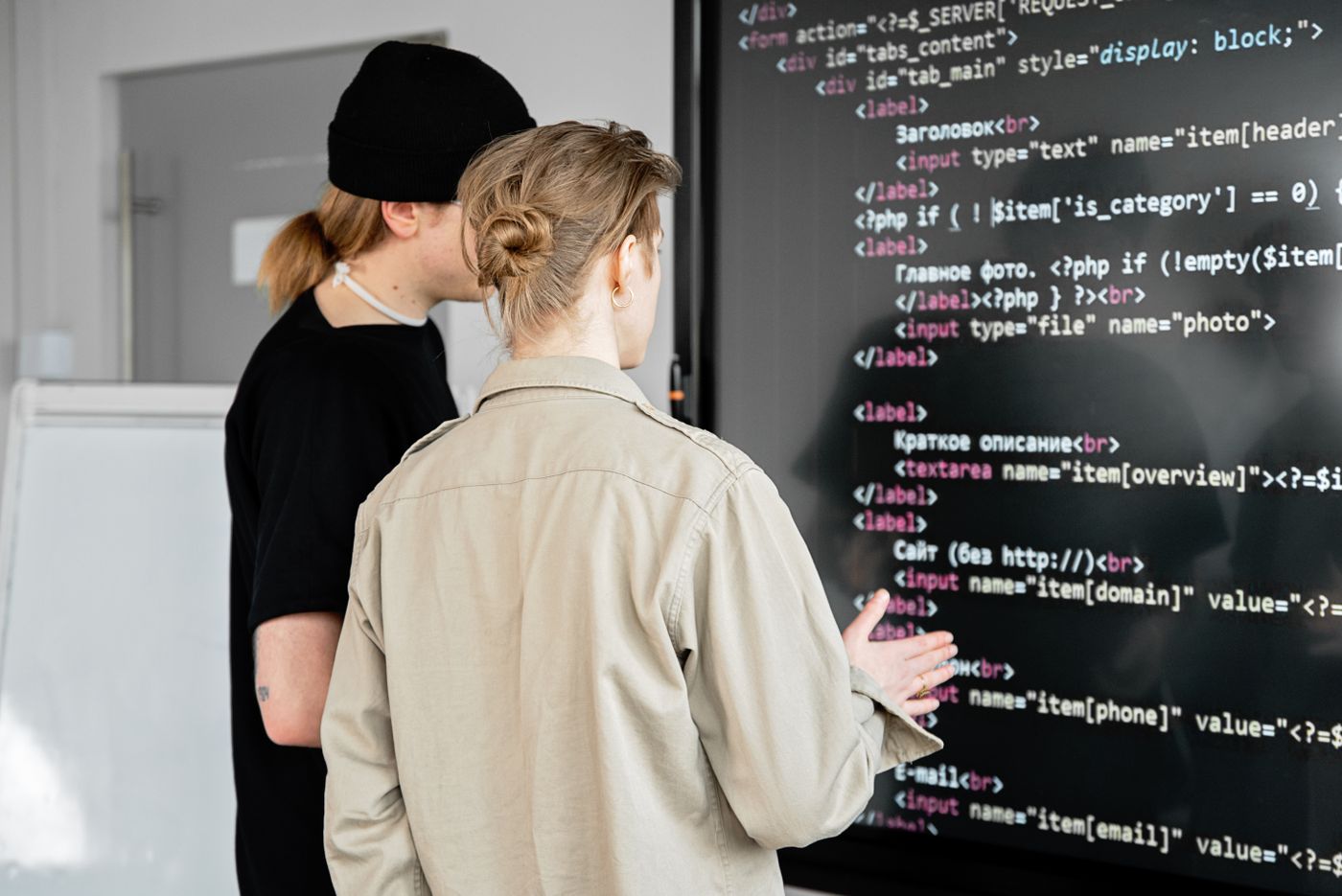
It has changed how we work.
Traditional development workflows were designed around the limitations of human execution.
AI changes many of those constraints.
We use AI throughout the software-development lifecycle to increase the amount of useful work an experienced engineer can accomplish.
But there is an important distinction:
AI assists the engineering process.
It does not own the engineering decisions.
We think of modern software engineering as a collaboration between two different strengths.
Neither is enough on its own.
Together, they create a significantly more capable development process.
AI has made producing code easier.
That does not make software engineering easy.
In fact, it can create a new problem:
It is now possible to build the wrong thing much faster.
A poorly designed architecture can be generated quickly.
Unnecessary features can be implemented quickly.
Security mistakes can spread quickly.
Technical debt can accumulate quickly.
An inexperienced developer with AI may produce more code.
An experienced engineer with AI can make better decisions and execute them faster.
That distinction defines our approach.
Astute Solutions was founded in 2006.
We have built through multiple generations of technology:
That history matters.
Because while tools change rapidly, many engineering fundamentals remain remarkably consistent:
AI changes how quickly we can execute.
It doesn't remove the need to know what should be executed.
AI is not limited to generating code.
We use it where it can create meaningful leverage throughout product development.
Before development begins, we use AI-assisted research to explore:
This can accelerate the learning process considerably.
But research is only input.
Humans still determine what is relevant to the product.
Clients often arrive with:
AI can assist us in exploring scenarios, identifying edge cases and organizing requirements.
Our team then converts that information into a practical product structure.
The objective is to answer:
These decisions define the product long before code does.
Architecture involves trade-offs.
AI allows engineers to explore alternatives and evaluate potential approaches faster.
But architecture remains an engineering responsibility.
We decide what belongs in production.
One of AI's greatest advantages is reducing the distance between an idea and something people can interact with.
We can use AI-assisted workflows to create:
This allows product decisions to happen earlier.
Instead of debating an idea for weeks, we can often test it.
Then improve.
AI assists our engineers with areas such as:
This allows engineers to spend more time on the work requiring judgement.
AI can generate code.
Our engineers remain responsible for what enters the product.
The same technology used to accelerate development can also assist in reviewing it.
AI-assisted analysis can help identify:
This does not replace engineering review.
It gives engineers another layer of analysis.
Speed without testing creates risk.
AI can assist with:
Human testing remains important, particularly around real user workflows.
The objective isn't simply to produce software faster.
It is to shorten the complete:
cycle.
Debugging can consume significant engineering time.
AI can assist developers in analyzing:
That can reduce investigation time.
But suggested fixes still need to be understood and validated before they become production changes.
Documentation is one of the areas development teams often neglect because it competes with feature development for time.
AI can assist with:
This makes it easier to keep useful documentation closer to the product as it evolves.
Once software is in production, AI can also help teams analyze:
This can help turn real-world product information into better development priorities.
AI therefore becomes part of both:
There are decisions we do not simply delegate to AI.
These include critical decisions around:
AI can assist.
Experienced people remain accountable.
It can contain:
AI-generated code therefore needs the same fundamental question as human-written code:
Our development process treats AI output as engineering material to be understood, reviewed, tested and validated — not automatically trusted.
Historically, increasing development output usually meant adding more developers.
AI changes that equation.
A smaller team of experienced, AI-augmented engineers can now accomplish work that previously required considerably more manual effort.
That can create advantages in:
The objective isn't to minimize headcount at any cost.
It is to assemble the smallest capable team for the problem.
When we talk about faster AI-assisted development, we don't mean skipping:
The speed comes from reducing time spent on work that technology can accelerate.
That leaves more human attention for the decisions that deserve it.
AI makes shorter product-development cycles increasingly practical.
Instead of attempting to predict every requirement months in advance, products can evolve through smaller loops:
This is particularly valuable for SaaS and AI products where customer feedback and technology can change quickly.
Not every problem requires artificial intelligence.
A database query may be better.
A deterministic rule may be safer.
A traditional algorithm may be cheaper.
A simple workflow may be more reliable.
An API may already solve the problem.
We use AI where it creates meaningful value.
We don't add AI simply because the technology exists.
That is part of engineering judgement.
Modern products can combine:
The right product is rarely the one with the most custom code.
The better question is:
What should we build ourselves because it creates differentiation?
What should we integrate because someone else already solves it well?
That decision can significantly affect development time, cost and maintainability.
Our experience isn't limited to using AI internally.
We build AI capabilities into software where they solve meaningful problems.
Potential applications include:
The AI model is usually only one component.
Production AI still needs:
That's where traditional software engineering and AI engineering meet.
Understand the business, users and problem.
Determine the product scope and priorities.
Design the technical foundation.
Test important assumptions quickly.
Develop using experienced, AI-augmented engineers.
Evaluate code, architecture and implementation.
Validate workflows, edge cases and product behaviour.
Deploy into a production environment.
Understand what happens in real use.
Continue developing based on evidence.
AI can assist at almost every stage.
Human responsibility exists at every stage.
Our AI-native development model is designed to create practical advantages:
Evaluate ideas and technical approaches earlier.
Move from discussion to something tangible sooner.
Reduce repetitive engineering effort.
Give developers additional tools for reviewing complex systems and problems.
Respond more quickly to feedback and changing requirements.
Create meaningful development capacity without unnecessarily large engineering organizations.
Make ongoing product development more commercially practical.
AI-native development does not mean:
A company founded today can use AI.
So can Astute.
The difference is that we bring two decades of accumulated engineering experience into that new environment.
And we are rebuilding our development process around what modern AI now makes possible.
That combination defines the next chapter of Astute Solutions.

The tools have changed. The possibilities have changed. The speed has changed. Our responsibility hasn't. Experienced engineering. AI-augmented execution. Understand the problem. Engineer the right solution. Build it well. Keep improving it.